Cilgerran Festive Week – Since 1950
By Sarah Moore
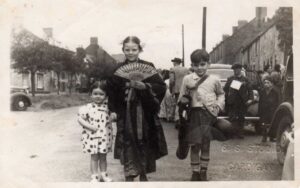
For us ‘Cilgerranites’ as well as visitors to the village, one of the main highlights of the year is our Festive Week. We are all proud to be a part of the annual celebrations, that in it’s traditional from, date back to 1950. The week – plus the weekends are all planned around the 19th August, the St Lawrence Fair Day. The original St Lawrence Fair travelled around the country villages selling their wares on the streets whilst also offering some entertainment. It is thought that at one time they even brought bear baiting that attracted the curious crowds on the common land in Cilgerran! This piece of ground later became known as the village green and is situated behind the row of trees in front of Babell Chapel. Housewives turned out to buy and barter for cooking pans, kettles and other household implements whilst the men were probably wetting their whistles in one of the thirteen ‘tafarn smyglin’ with their sawdust strewn floors.
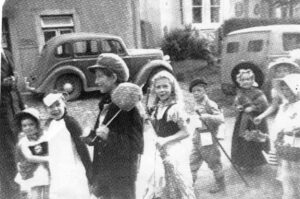
Over time the fair evolved into a funfair – although it was still the St Lawrence Fair and continued to visit the village every 19th August at the football field. Although one year, when the field was flooded the fair was held on the field opposite the Village Hall, where a housing estate has now been built. The scariest ride was the swing boats and we would roll balls all evening to win a chalk figurine! The children of the fair became our friends during their brief visit and we thought that their traveling lifestyle was wonderful with no school! Although St Lawrence Fair is no longer a visitor here, Festive Week is still held on the week around the 19th August. Keeping to this date has proved to be useful when planning holidays for those of us who go away in the summer as well as for those who love to visit us for the festivities. Each year it is noticeable how many ‘Cilgerranites’ return to the village to take part and enjoy the events.
Over the years some of these events have become a permanent fixture of the week. It has always begun with the Horticultural Show and finished with the Coracle Races on the final Saturday. The carnival has moved around a bit but it is still a firm favourite. There was a time when all the local farmers gave up their tractors and trailers and the lorries from D.G. Thomas at the sawmills were booked in advance for the floats. The first vehicle in the procession carried the newly crowned Carnival Queen and her two attendants. The ladies of the committee had festooned the pick-up with garlands of flowers as it led the carnival from the castle square, through the village to the station square where it returned through Cilgerran and up to the football field for the grand judging. The noise, colours and marching band ensured that the street was lined with applauding on-lookers. Much of this is as it is today.
The teenage queen and attendants were selected at two dances that were held in the YCMA earlier in the year. Holiday makers in the village were usually asked to be the non-biased judges. Some of these Midland folk took it so seriously that they would promptly re-book their visit the following year to do the whole thing again! This ‘beauty pageant’ style has now been abolished! Their other duty was to attend the coracle races held on the River Teifi at the bottom of Dolbaddu – not just to mingle with the crowds on the bank but they were expected to take a boat ride down the course waving to the cheering masses. It wasn’t unusual to see at least a couple of thousand people on the banks watching the coracles races as well as swimming and diving events. Some spectators would endeavour to enter the area without paying by coming through the castle – however there was always a committee member lurking in the trees. A Tivyside reporter sat in the entry tent and recorded all the results as they came in for the next edition where we all read what we already knew! And to think that this event was originally added as an afterthought just as something to do on the Saturday!
The Sundays were taken up by a Sacred Concert and Community Hymn Singing. The Concert, held in the hall, usually involved a male voice choir from the valleys. Someone in Cilgerran had a relative in that area who knew a woman who had a son that sang – this was how you got a choir to Cilgerran! Although the pubs were all closed on Sundays, it would have appeared inhospitable to allow these wonderful entertainers to make the long journey home again without a little sustenance. The singing often carried on until the early hours!
As the years have slipped by, some of the events have altered a little. The Horticultural Show was once a cornucopia of floribunda with heavy perfume abound, whereas it now includes more handicraft work and some different classes so that more exhibitors and children can take part. Photography and art are now a firm mainstay at the show.
A firm favourite has been the car treasure hunt which now ends back in Cilgerran. Cars meander through the lanes of the locality, suddenly stopping to examine a discarded milk churn before speeding off again with, hopefully, a solved clue. Patience from all road users is a necessary requirement! Children, with their family and friends have their opportunity to gather treasures at the family treasure hunt which has been resurrected over the last few years and is proving to be a successful event with a good turn-out.
For many years the week included the children’s ‘Bun Fight’ in the hall. However the committee ladies found it difficult to set up with the children all trying to get in early in order to bag as many jam sandwiches and Welsh cakes as possible. So, the novelty races were set up where slow bicycle races, pillow fights and three-legged races were just some of the challenges. This kept all the youngsters occupied until the appropriate time when they had all certainly earned their tea.
New events have been added over the years. The donkey derby is a popular and successful event for jockeys, those that like a flutter as well as spectators. It is remarkable to witness some of the lengths that young children will go to in order to get a winners rosette! Walks of social and historical interest around the village – followed by a well-earned tea party in the hall, regardless of the weather, are a wonderful and interesting way of learning about our surroundings. You may even learn something about the buildings and why things are the way they are. Music and barbeques in the village pubs – no longer thirteen of them – have become a regular feature of Festive Week. Some events made a brief appearance. Supermarket shopping trolley racing lasted just one year. It was popular, fun and thoroughly enjoyed by spectators and all who took part but the St John’s Ambulance were so busy that they highly recommended not repeating the event!
Cilgerran Village has greatly benefited from the annual Festive Week. It brings us all together as a community, much to the envy of nearby villages and towns. It offers such a variety of functions that there has to be something for everyone. All monies raised are put back into the village. One of the biggest projects was replacing the old wooden YMCA with a modern village community hall.
In the archives of Cilgerran there are photographs showing carnivals of bygone days held in the castle grounds, there may have been other events held as well, but the Festive Week as we know it today began its life in 1950 and has been held every year since. Its success is, undoubtedly, down to the hard work put in by the Festive Week committee. Down through the years, this merry band of stalwarts have worked their socks off as they have met, planned, put up the flags, baked endless cakes, transported barbeques and marquees through the village at all times of day and night and organised bingo nights. If you enjoy Festive Week then why not see if you can help them at all? You will be welcomed and appreciated.

Being asked to be a president of an event or the week is, indeed, a great honour and privilege. Normally this would be someone who has a strong connection to Cilgerran, often a village person who has left and longs to visit again to support the week’s events.
One of the many reasons that we can be proud to tell others where we come from is all down to our own and unique Cilgerran Festive Week.

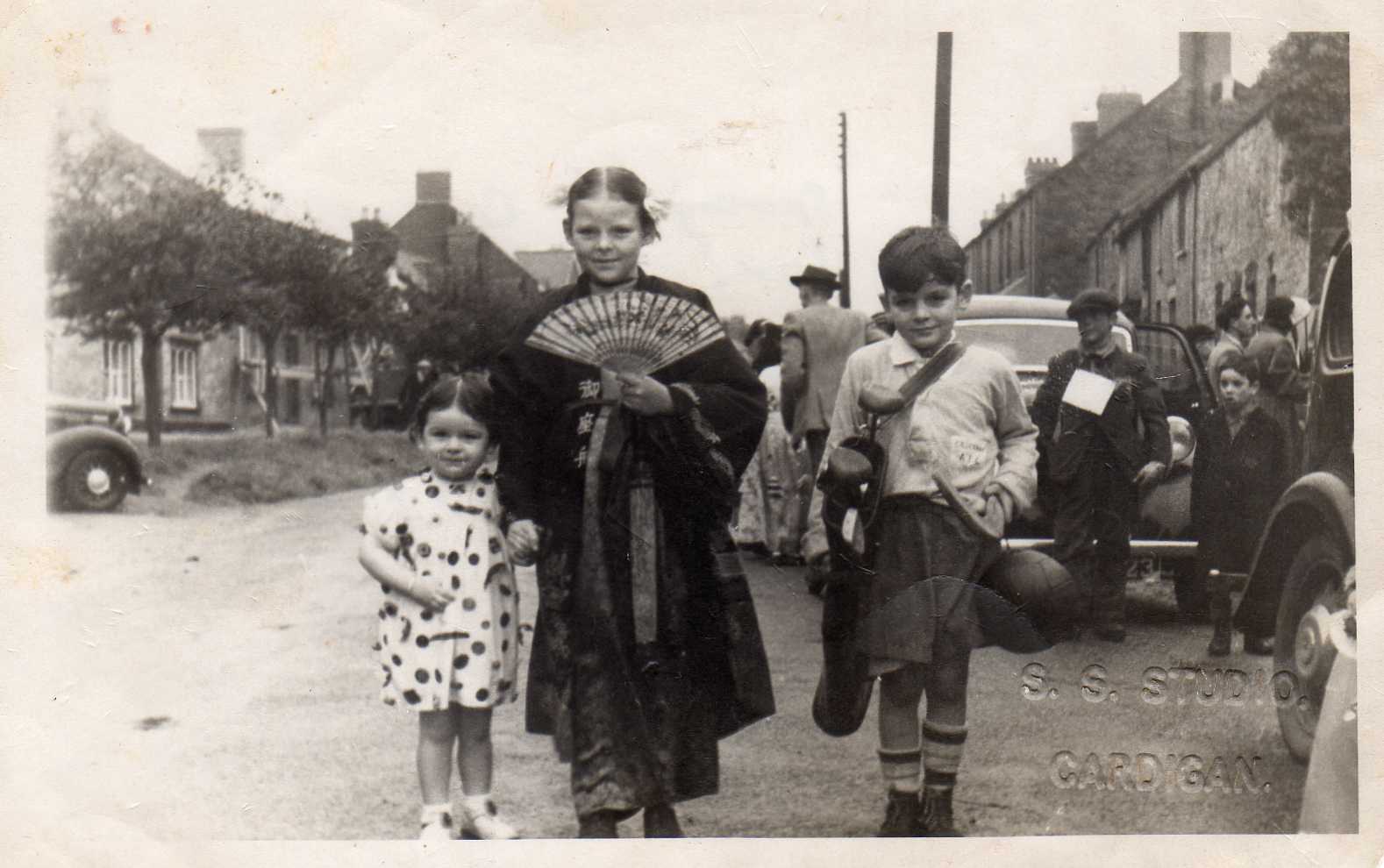 For us ‘Cilgerranites’ as well as visitors to the village, one of the main highlights of the year is our Festive Week. We are all proud to be a part of the annual celebrations, that in it’s traditional from, date back to 1950. The week – plus the weekends are all planned around the 19th August, the St Lawrence Fair Day. The original St Lawrence Fair travelled around the country villages selling their wares on the streets whilst also offering some entertainment. It is thought that at one time they even brought bear baiting that attracted the curious crowds on the common land in Cilgerran! This piece of ground later became known as the village green and is situated behind the row of trees in front of Babell Chapel. Housewives turned out to buy and barter for cooking pans, kettles and other household implements whilst the men were probably wetting their whistles in one of the thirteen ‘tafarn smyglin’ with their sawdust strewn floors.
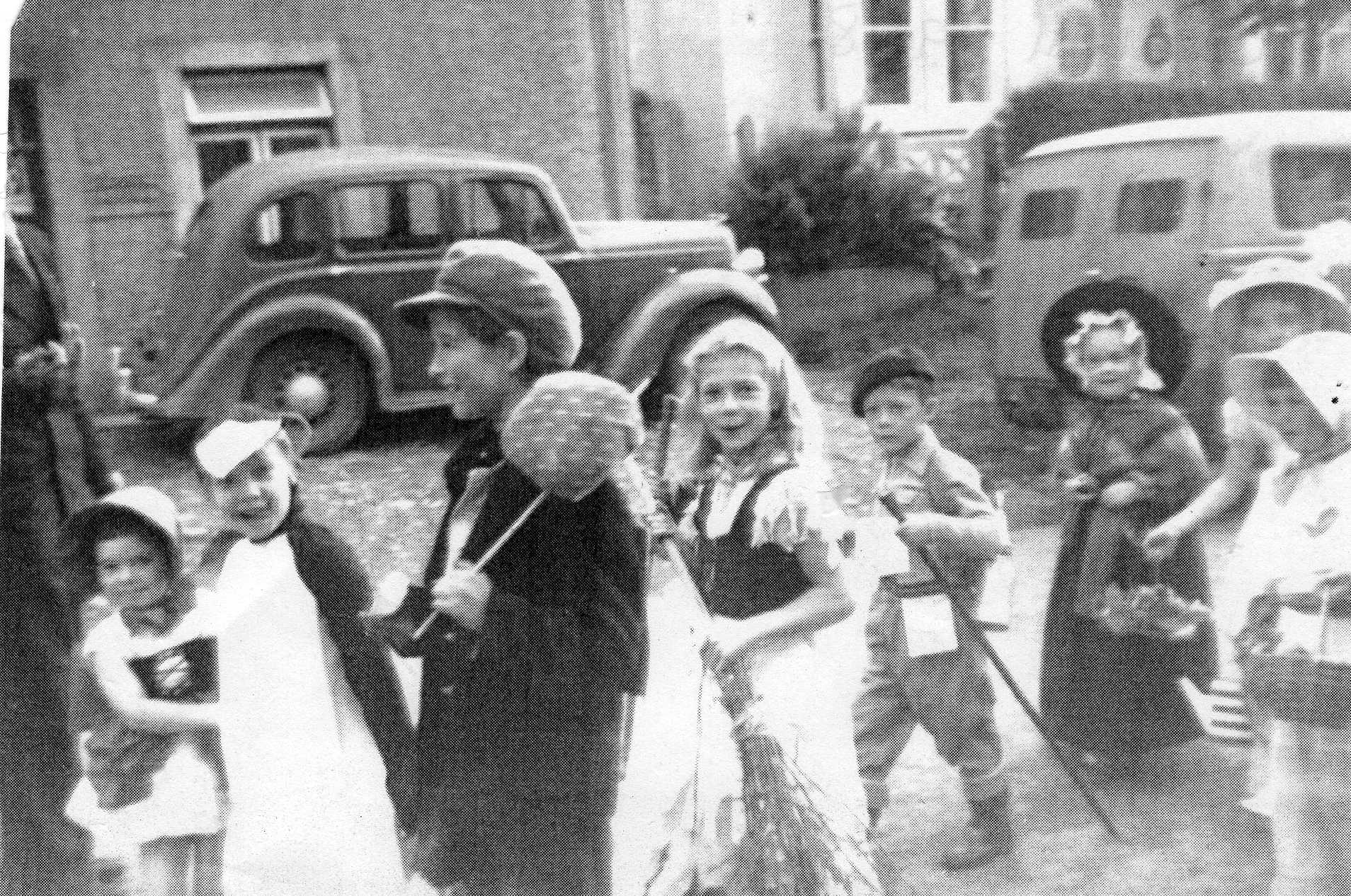 Over time the fair evolved into a funfair – although it was still the St Lawrence Fair and continued to visit the village every 19th August at the football field. Although one year, when the field was flooded the fair was held on the field opposite the Village Hall, where a housing estate has now been built. The scariest ride was the swing boats and we would roll balls all evening to win a chalk figurine! The children of the fair became our friends during their brief visit and we thought that their traveling lifestyle was wonderful with no school! Although St Lawrence Fair is no longer a visitor here, Festive Week is still held on the week around the 19th August. Keeping to this date has proved to be useful when planning holidays for those of us who go away in the summer as well as for those who love to visit us for the festivities. Each year it is noticeable how many ‘Cilgerranites’ return to the village to take part and enjoy the events.
Over the years some of these events have become a permanent fixture of the week. It has always begun with the Horticultural Show and finished with the Coracle Races on the final Saturday. The carnival has moved around a bit but it is still a firm favourite. There was a time when all the local farmers gave up their tractors and trailers and the lorries from D.G. Thomas at the sawmills were booked in advance for the floats. The first vehicle in the procession carried the newly crowned Carnival Queen and her two attendants. The ladies of the committee had festooned the pick-up with garlands of flowers as it led the carnival from the castle square, through the village to the station square where it returned through Cilgerran and up to the football field for the grand judging. The noise, colours and marching band ensured that the street was lined with applauding on-lookers. Much of this is as it is today.
The teenage queen and attendants were selected at two dances that were held in the YCMA earlier in the year. Holiday makers in the village were usually asked to be the non-biased judges. Some of these Midland folk took it so seriously that they would promptly re-book their visit the following year to do the whole thing again! This ‘beauty pageant’ style has now been abolished! Their other duty was to attend the coracle races held on the River Teifi at the bottom of Dolbaddu – not just to mingle with the crowds on the bank but they were expected to take a boat ride down the course waving to the cheering masses. It wasn’t unusual to see at least a couple of thousand people on the banks watching the coracles races as well as swimming and diving events. Some spectators would endeavour to enter the area without paying by coming through the castle – however there was always a committee member lurking in the trees. A Tivyside reporter sat in the entry tent and recorded all the results as they came in for the next edition where we all read what we already knew! And to think that this event was originally added as an afterthought just as something to do on the Saturday!
The Sundays were taken up by a Sacred Concert and Community Hymn Singing. The Concert, held in the hall, usually involved a male voice choir from the valleys. Someone in Cilgerran had a relative in that area who knew a woman who had a son that sang – this was how you got a choir to Cilgerran! Although the pubs were all closed on Sundays, it would have appeared inhospitable to allow these wonderful entertainers to make the long journey home again without a little sustenance. The singing often carried on until the early hours!
As the years have slipped by, some of the events have altered a little. The Horticultural Show was once a cornucopia of floribunda with heavy perfume abound, whereas it now includes more handicraft work and some different classes so that more exhibitors and children can take part. Photography and art are now a firm mainstay at the show.
A firm favourite has been the car treasure hunt which now ends back in Cilgerran. Cars meander through the lanes of the locality, suddenly stopping to examine a discarded milk churn before speeding off again with, hopefully, a solved clue. Patience from all road users is a necessary requirement! Children, with their family and friends have their opportunity to gather treasures at the family treasure hunt which has been resurrected over the last few years and is proving to be a successful event with a good turn-out.
For many years the week included the children’s ‘Bun Fight’ in the hall. However the committee ladies found it difficult to set up with the children all trying to get in early in order to bag as many jam sandwiches and Welsh cakes as possible. So, the novelty races were set up where slow bicycle races, pillow fights and three-legged races were just some of the challenges. This kept all the youngsters occupied until the appropriate time when they had all certainly earned their tea.
New events have been added over the years. The donkey derby is a popular and successful event for jockeys, those that like a flutter as well as spectators. It is remarkable to witness some of the lengths that young children will go to in order to get a winners rosette! Walks of social and historical interest around the village – followed by a well-earned tea party in the hall, regardless of the weather, are a wonderful and interesting way of learning about our surroundings. You may even learn something about the buildings and why things are the way they are. Music and barbeques in the village pubs – no longer thirteen of them – have become a regular feature of Festive Week. Some events made a brief appearance. Supermarket shopping trolley racing lasted just one year. It was popular, fun and thoroughly enjoyed by spectators and all who took part but the St John’s Ambulance were so busy that they highly recommended not repeating the event!
Cilgerran Village has greatly benefited from the annual Festive Week. It brings us all together as a community, much to the envy of nearby villages and towns. It offers such a variety of functions that there has to be something for everyone. All monies raised are put back into the village. One of the biggest projects was replacing the old wooden YMCA with a modern village community hall.
In the archives of Cilgerran there are photographs showing carnivals of bygone days held in the castle grounds, there may have been other events held as well, but the Festive Week as we know it today began its life in 1950 and has been held every year since. Its success is, undoubtedly, down to the hard work put in by the Festive Week committee. Down through the years, this merry band of stalwarts have worked their socks off as they have met, planned, put up the flags, baked endless cakes, transported barbeques and marquees through the village at all times of day and night and organised bingo nights. If you enjoy Festive Week then why not see if you can help them at all? You will be welcomed and appreciated.
Over time the fair evolved into a funfair – although it was still the St Lawrence Fair and continued to visit the village every 19th August at the football field. Although one year, when the field was flooded the fair was held on the field opposite the Village Hall, where a housing estate has now been built. The scariest ride was the swing boats and we would roll balls all evening to win a chalk figurine! The children of the fair became our friends during their brief visit and we thought that their traveling lifestyle was wonderful with no school! Although St Lawrence Fair is no longer a visitor here, Festive Week is still held on the week around the 19th August. Keeping to this date has proved to be useful when planning holidays for those of us who go away in the summer as well as for those who love to visit us for the festivities. Each year it is noticeable how many ‘Cilgerranites’ return to the village to take part and enjoy the events.
Over the years some of these events have become a permanent fixture of the week. It has always begun with the Horticultural Show and finished with the Coracle Races on the final Saturday. The carnival has moved around a bit but it is still a firm favourite. There was a time when all the local farmers gave up their tractors and trailers and the lorries from D.G. Thomas at the sawmills were booked in advance for the floats. The first vehicle in the procession carried the newly crowned Carnival Queen and her two attendants. The ladies of the committee had festooned the pick-up with garlands of flowers as it led the carnival from the castle square, through the village to the station square where it returned through Cilgerran and up to the football field for the grand judging. The noise, colours and marching band ensured that the street was lined with applauding on-lookers. Much of this is as it is today.
The teenage queen and attendants were selected at two dances that were held in the YCMA earlier in the year. Holiday makers in the village were usually asked to be the non-biased judges. Some of these Midland folk took it so seriously that they would promptly re-book their visit the following year to do the whole thing again! This ‘beauty pageant’ style has now been abolished! Their other duty was to attend the coracle races held on the River Teifi at the bottom of Dolbaddu – not just to mingle with the crowds on the bank but they were expected to take a boat ride down the course waving to the cheering masses. It wasn’t unusual to see at least a couple of thousand people on the banks watching the coracles races as well as swimming and diving events. Some spectators would endeavour to enter the area without paying by coming through the castle – however there was always a committee member lurking in the trees. A Tivyside reporter sat in the entry tent and recorded all the results as they came in for the next edition where we all read what we already knew! And to think that this event was originally added as an afterthought just as something to do on the Saturday!
The Sundays were taken up by a Sacred Concert and Community Hymn Singing. The Concert, held in the hall, usually involved a male voice choir from the valleys. Someone in Cilgerran had a relative in that area who knew a woman who had a son that sang – this was how you got a choir to Cilgerran! Although the pubs were all closed on Sundays, it would have appeared inhospitable to allow these wonderful entertainers to make the long journey home again without a little sustenance. The singing often carried on until the early hours!
As the years have slipped by, some of the events have altered a little. The Horticultural Show was once a cornucopia of floribunda with heavy perfume abound, whereas it now includes more handicraft work and some different classes so that more exhibitors and children can take part. Photography and art are now a firm mainstay at the show.
A firm favourite has been the car treasure hunt which now ends back in Cilgerran. Cars meander through the lanes of the locality, suddenly stopping to examine a discarded milk churn before speeding off again with, hopefully, a solved clue. Patience from all road users is a necessary requirement! Children, with their family and friends have their opportunity to gather treasures at the family treasure hunt which has been resurrected over the last few years and is proving to be a successful event with a good turn-out.
For many years the week included the children’s ‘Bun Fight’ in the hall. However the committee ladies found it difficult to set up with the children all trying to get in early in order to bag as many jam sandwiches and Welsh cakes as possible. So, the novelty races were set up where slow bicycle races, pillow fights and three-legged races were just some of the challenges. This kept all the youngsters occupied until the appropriate time when they had all certainly earned their tea.
New events have been added over the years. The donkey derby is a popular and successful event for jockeys, those that like a flutter as well as spectators. It is remarkable to witness some of the lengths that young children will go to in order to get a winners rosette! Walks of social and historical interest around the village – followed by a well-earned tea party in the hall, regardless of the weather, are a wonderful and interesting way of learning about our surroundings. You may even learn something about the buildings and why things are the way they are. Music and barbeques in the village pubs – no longer thirteen of them – have become a regular feature of Festive Week. Some events made a brief appearance. Supermarket shopping trolley racing lasted just one year. It was popular, fun and thoroughly enjoyed by spectators and all who took part but the St John’s Ambulance were so busy that they highly recommended not repeating the event!
Cilgerran Village has greatly benefited from the annual Festive Week. It brings us all together as a community, much to the envy of nearby villages and towns. It offers such a variety of functions that there has to be something for everyone. All monies raised are put back into the village. One of the biggest projects was replacing the old wooden YMCA with a modern village community hall.
In the archives of Cilgerran there are photographs showing carnivals of bygone days held in the castle grounds, there may have been other events held as well, but the Festive Week as we know it today began its life in 1950 and has been held every year since. Its success is, undoubtedly, down to the hard work put in by the Festive Week committee. Down through the years, this merry band of stalwarts have worked their socks off as they have met, planned, put up the flags, baked endless cakes, transported barbeques and marquees through the village at all times of day and night and organised bingo nights. If you enjoy Festive Week then why not see if you can help them at all? You will be welcomed and appreciated.
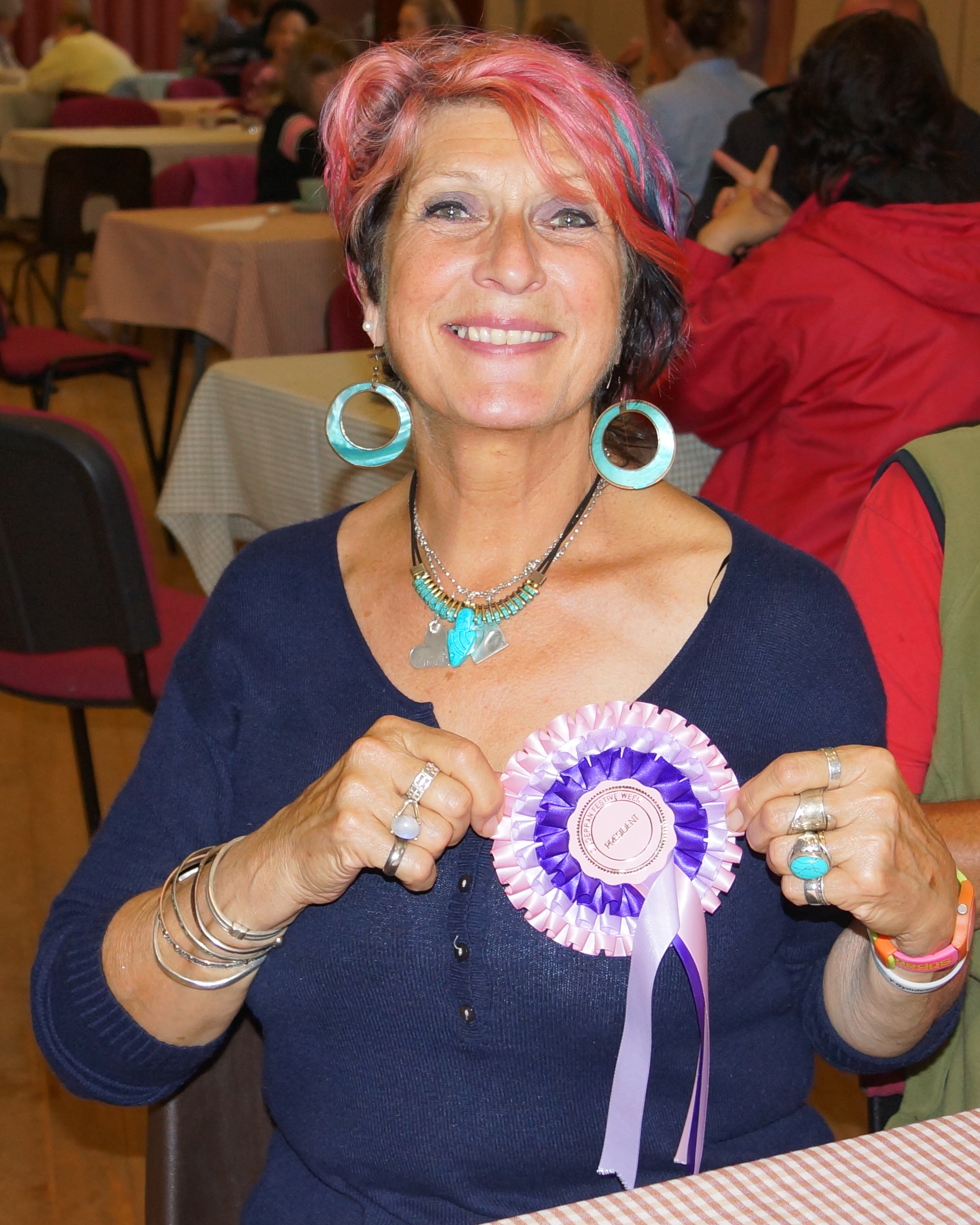 Being asked to be a president of an event or the week is, indeed, a great honour and privilege. Normally this would be someone who has a strong connection to Cilgerran, often a village person who has left and longs to visit again to support the week’s events.
One of the many reasons that we can be proud to tell others where we come from is all down to our own and unique Cilgerran Festive Week.
Being asked to be a president of an event or the week is, indeed, a great honour and privilege. Normally this would be someone who has a strong connection to Cilgerran, often a village person who has left and longs to visit again to support the week’s events.
One of the many reasons that we can be proud to tell others where we come from is all down to our own and unique Cilgerran Festive Week.